← Back to Selected Work
03 — Employee Center Kiosk · ServiceNow · 2024–2025

Reimagining self-service
for the deskless worker.

Enterprise software assumed a desk. Frontline workers didn't have one. We designed Employee Center Pro Kiosk around the reality of shared devices, short sessions, and getting things done.

My Role
Design Lead & Manager
Team
2 Designers
Timeline
4 months · V1
North Star
From Ask to Action
Contribution
Design Direction · Experience Strategy · Hands-on
Product Design Employee Experience Deskless Workers
Strategic Context

Employee Center served office workers.
The frontline was left behind.

Three forces made this a strategic opportunity
01 · Market Gap
~80% of the global workforce is deskless — underserved by enterprise experiences built around desks and laptops.
02 · Platform Moment
Employee Center had proven self-service for office workers. The next frontier was frontline — a natural expansion of the platform's reach.
03 · Operational Cost
Manager dependency for basic information created avoidable operational cost for customers — and daily friction for frontline workers.
The Opportunity

Bring self-service to the workers enterprise software had always assumed away.

Ask
→
Act
Invisible
→
Served
Dependent
→
Self-sufficient
The Challenge

Three gaps made frontline
work invisible.

80%
of the global workforce is deskless
Manufacturing, logistics, healthcare, and retail workers were underserved by enterprise experiences built around desks and laptops.
0
dedicated digital touchpoints
No convenient way to access everyday employee services from a shared device.
High
manager dependency
Shift information, leave, pay, and basic requests often still depended on a manager.

The problem wasn't a missing feature.
The portal was designed for the wrong person.

Employee Center assumed a personal device, extended browsing, and information-rich navigation. Frontline workers needed something fundamentally different.

01
No access point
Employee Center wasn't designed for shared, multi-user kiosk sessions.
02
Wrong interaction model
Frontline workers needed quick, task-first interactions — not portal browsing.
03
No established trust
Workers were used to asking managers. Self-service had to earn their confidence.

The challenge wasn't to adapt the portal. It was to rethink self-service around the frontline worker.

Design Strategy

Three beliefs shaped
the frontline experience.

01

At-a-Glance Understanding

Workers should immediately see what's relevant to them. No searching. No exploration. No learning curve.

If finding the starting point takes effort, we've already added friction.

02

Task Completion Over Navigation

Workers shouldn't need to understand organizational structures, HR systems, or portal architecture. The experience should surface actions directly — meeting workers where they are.

03

Trust Before Behaviour Change

Workers defaulted to asking managers because no tool had reliably worked for them. Every interaction had to feel fast, clear, and dependable enough to earn repeat use.

Great design is not about improving an interface. It's about challenging assumptions and designing around real human behaviour.

The Product

A frontline experience built around action, not navigation.

Every screen was designed for a worker with limited time, a shared device, and one thing to do. The homepage surfaces what matters now. The profile puts personal information within one tap.
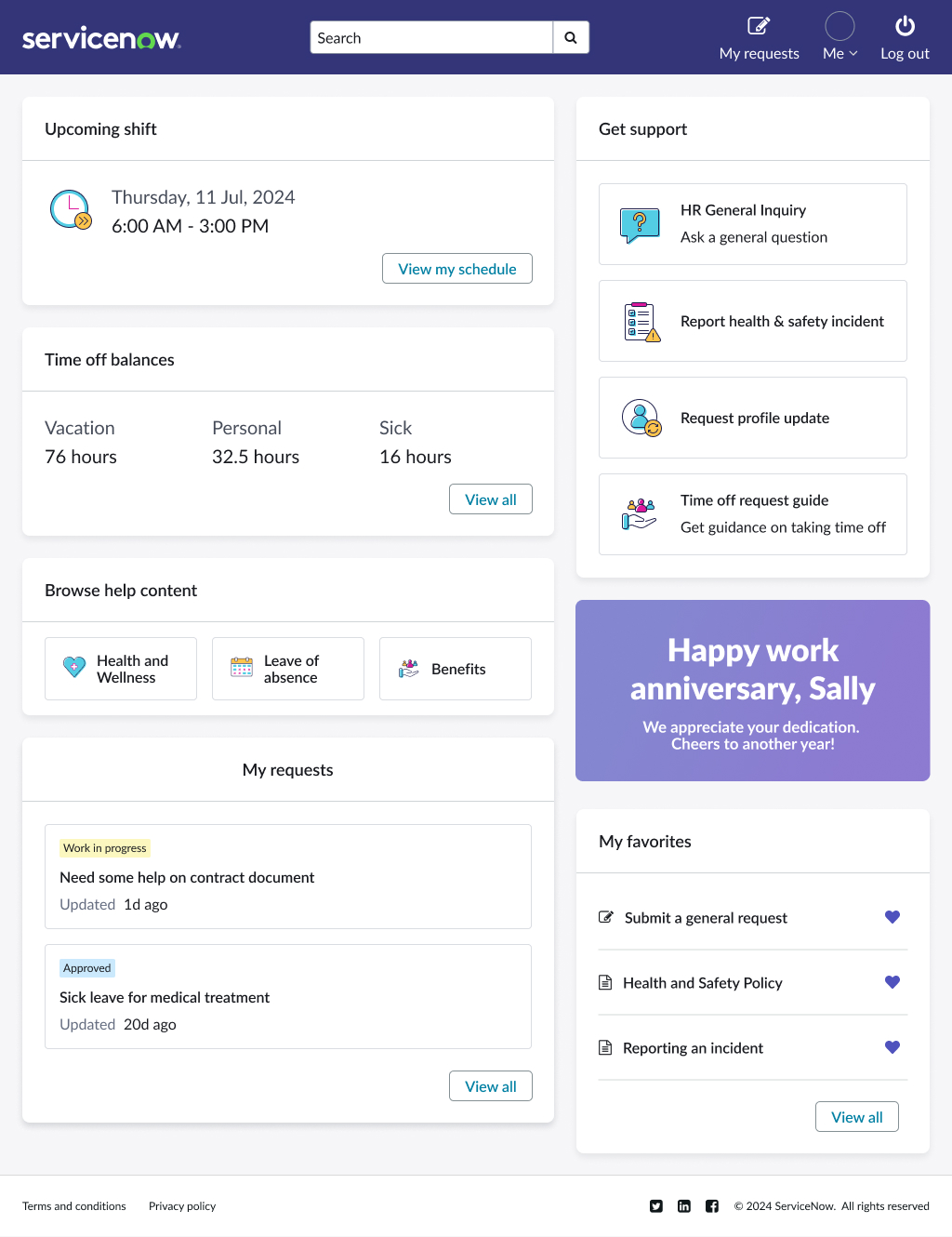
Kiosk Home Screen
Kiosk Home
See what matters now.
Shift information, time-off balances, and support actions surfaced immediately — without requiring workers to navigate a portal.
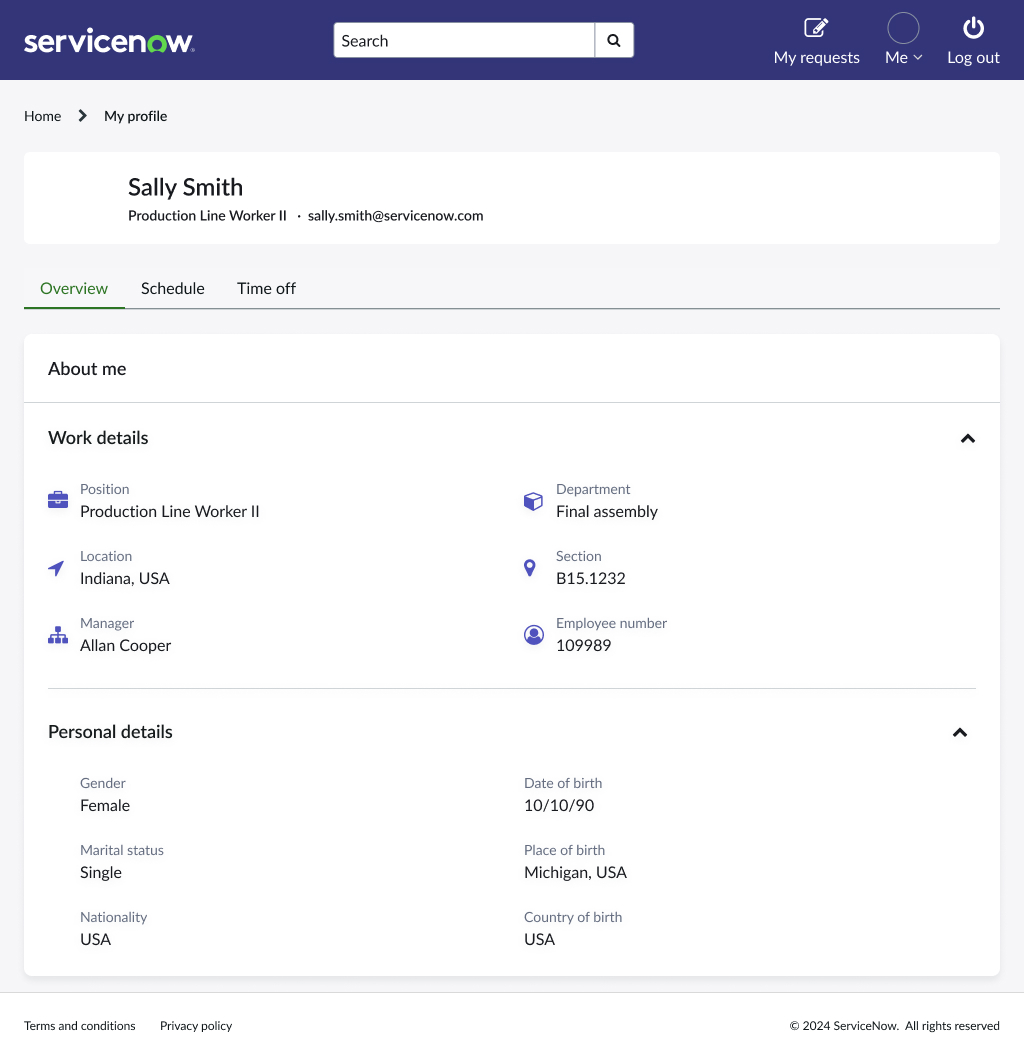
Kiosk Profile Screen
Kiosk Profile
Find essential information in one place.
Work details, schedule, and leave were organized around what frontline workers needed to know — not the underlying architecture of the HR system.
Impact

A new self-service model,
delivered in four months.

40–60%
Shift & Time-Off Self-Service
Eligible workers accessing schedules and leave balances without manager involvement.
60%+
Task Completion Without Assistance
Workers completing tasks independently — the primary design success criterion.
30–50%
HR & Support Self-Service
HR support interactions initiated through Kiosk rather than through managers or HR teams.
50%+
Repeat Monthly Usage
Workers returning month over month after initial activation.

Impact figures reflect post-launch results across the initial customer base, measured against success criteria defined with Product leadership before V1 shipped.

← Back to Selected Work Next Case Study →